
Quick Answer
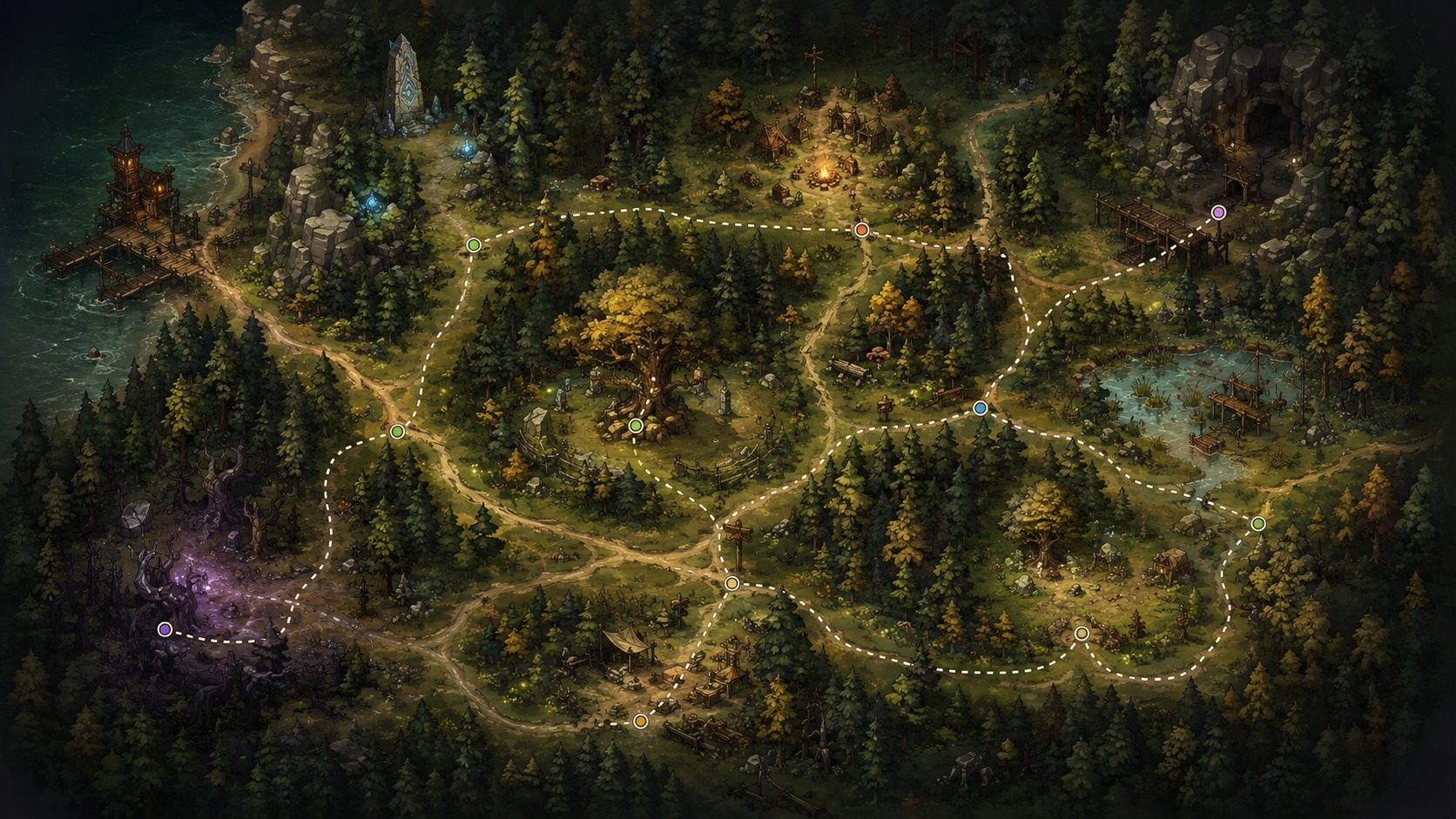
Hopeforest is the second major area in Brighter Shores and works like a large forest zone made from connected rooms, paths, clearings, and profession spots. The Hopeforest map is not about exact coordinates. It is about learning which paths connect key locations, where profession materials appear, and how to move between quest areas without getting lost.
For most players, the best way to navigate Hopeforest is to unlock nearby travel points, follow main paths first, then branch into side clearings for Forager, Woodcutting, enemies, and quest objectives.
This brighter shores hopeforest map guide explains the main navigation logic, important locations, beginner routes, professions, quest areas, and travel tips.
How the Hopeforest Map Works
Hopeforest is different from a simple open-world map. It is built from many connected zones. Each screen or area usually links to several nearby paths, forest routes, or activity spots.
The main things to understand are:
| Map Element | What It Means |
|---|---|
| Main paths | Safer routes used to move between important areas |
| Side paths | Lead to resources, enemies, or quest locations |
| Clearings | Often contain NPCs, activities, or profession nodes |
| Dense forest areas | Can be harder to memorize and may loop through similar-looking places |
| Travel points | Help reduce long walks after you unlock them |
Hopeforest navigation becomes much easier once you stop trying to memorize every screen at once. Focus on landmarks instead. Remember where a path starts, what activity is nearby, and which direction leads back to a main route.
For a wider overview of all regions, use the Brighter Shores map guide.
Important Hopeforest Locations
Hopeforest has several types of important locations. Some are useful for progression, while others are mainly used for professions or quests.
Main Forest Paths
The main forest paths are your basic navigation routes. These paths usually connect the central parts of Hopeforest to deeper forest areas, profession zones, and quest locations.
When you enter a new section, check which exits are available. If you are unsure where to go, return to a main path and move outward from there.
Clearings and Camps
Clearings are some of the most useful landmarks in Hopeforest. They often stand out visually and may include NPCs, profession activity, or quest-related interaction points.
Use clearings as “memory anchors.” For example, instead of remembering a long chain of screens, remember that a specific resource area is near a clearing or that a quest NPC is reached from a certain path.
Resource Areas
Hopeforest includes many profession-related areas. These are usually placed off main paths or inside forest sections that are easy to revisit once you know the route.
Resource areas are important because you may return to them many times while training professions. If you find a useful gathering or Woodcutting spot, take note of the nearest landmark or travel point.
Enemy Areas
Some parts of Hopeforest contain enemies or combat-related progression. These areas may be linked to quests or profession goals.
Before going deep into unknown forest paths, check your supplies and make sure you know how to return to a safe route.
Travel and Obelisk Points
Travel points are very important in Hopeforest because the area can feel large when you are walking everywhere manually. Unlocking useful travel points early makes profession training, questing, and material collection much faster.
For more detail, see the teleports and obelisks guide.
Hopeforest Routes for Beginners
If you are new to Hopeforest, do not try to explore every side route immediately. A simple route plan works better.
Beginner Route 1: Main Path Familiarization
Start by following the main route through Hopeforest. Your goal is not to collect everything yet. Your goal is to understand how the area is connected.
As you move, pay attention to:
- Major turns
- Clearings
- NPC locations
- Profession icons or activity spots
- Paths that lead deeper into the forest
Once you know the central route, it becomes much easier to explore side areas without losing track of where you are.
Beginner Route 2: Profession Loop
After learning the main route, choose one profession to focus on. For many players, this will be Forager or Woodcutting because Hopeforest has many natural resource areas.
A simple profession loop looks like this:
- Start near a known travel point or landmark.
- Move to the nearest resource area.
- Gather or cut until your inventory or goal is complete.
- Return using the same route.
- Repeat until you unlock better areas or materials.
This method is slower at first, but it prevents wasted time from wandering around without a clear plan.
For profession help, use the Forager guide and Woodcutting guide.
Beginner Route 3: Quest Route
When doing quests in Hopeforest, avoid mixing too many tasks at once. Pick one quest, identify the NPC or location it needs, then travel from landmark to landmark.
Quest routes are easier when you:
- Read the quest text carefully
- Check nearby paths before going far away
- Remember the closest travel point
- Clear one objective before starting another
Hopeforest quests often send you through forest paths, so learning the map naturally helps with quest progress.
Hopeforest Professions and Materials
Hopeforest is strongly tied to outdoor professions. It is one of the main areas where players spend time gathering natural materials and training forest-related skills.
Forager
Forager is one of the most useful professions in Hopeforest. The area contains many gathering spots, and some may become relevant as your Forager level improves.
When training Forager, build a route around repeatable gathering locations. Do not chase every single node if it takes you too far from your route. A shorter, repeatable loop is usually easier to manage.
See the full Forager guide for training advice.
Woodcutting
Woodcutting is another key Hopeforest profession. Tree-related materials are found around forest paths and wooded areas.
A good Woodcutting route should be simple. Choose an area with trees you can currently cut, learn the nearest path back, and repeat the route until better options become available.
See the Woodcutting guide for more help.
Combat and Support Materials
Some Hopeforest areas may also connect to combat progression or materials used for other tasks. These locations are best handled after you understand the safer routes through the forest.
If an area feels too difficult, return later after improving your level, gear, or supplies.
Quest Locations in Hopeforest
Hopeforest includes quest content that often depends on finding NPCs, reaching forest locations, or investigating specific areas.
Because Brighter Shores can change with updates, it is better to think of quest locations by area type instead of exact map coordinates.
NPC Quest Starts
Some quests begin from NPCs found along main paths, near clearings, or inside recognizable forest areas. When you meet an NPC with quest dialogue, remember the route from the closest main path.
Objective Areas
Quest objectives may send you into side paths, deeper forest sections, or profession-related areas. These routes can be confusing if you rush.
A good method is to move one screen at a time and mentally mark the path back. If you pass a clearing, bridge, camp, or unusual terrain, use it as a landmark.
Return Points
Many quests require returning to an NPC after completing an objective. Before leaving a quest giver, remember the nearest travel point or main path connection. This saves time when turning in the quest.
For broader quest help, use the Brighter Shores quest guide.
Travel Tips for Hopeforest
Hopeforest becomes much easier once you treat it like a route-based area instead of a flat map.
Here are practical tips:
- Unlock travel points as soon as you can.
- Use main paths before exploring side routes.
- Learn one profession route at a time.
- Do not rely on exact coordinates.
- Use clearings and camps as landmarks.
- Return to known paths when lost.
- Keep questing and gathering separate when learning the area.
- Revisit old routes after unlocking new levels or tools.
The most common mistake is trying to explore everything in one trip. Hopeforest is easier when you build knowledge in layers. First learn the main paths, then profession spots, then quest routes, then deeper side areas.
FAQ
Is there a full Hopeforest map in Brighter Shores?
Hopeforest has a connected area layout made from many paths and screens. A full map can help, but practical navigation is more important than memorizing every location. Learn main routes, landmarks, travel points, and profession areas first.
Where should I go first in Hopeforest?
Start by following the main paths and unlocking useful travel points. After that, focus on one profession or one quest route at a time.
What professions are important in Hopeforest?
Forager and Woodcutting are especially important in Hopeforest because the area has many natural resource locations. Combat and other activities may also become relevant depending on your progression.
Why is Hopeforest confusing to navigate?
Hopeforest has many similar-looking forest paths, side routes, and clearings. It becomes easier once you use landmarks instead of trying to remember every screen.
Should I train professions while questing in Hopeforest?
You can, but it is often better to separate them when you are new. First complete a quest route or learn a profession loop. Mixing too many goals can make navigation harder.
How do teleports help in Hopeforest?
Teleports and obelisks reduce walking time. They are useful for returning to quest areas, repeating profession loops, and moving between important parts of the map faster.