
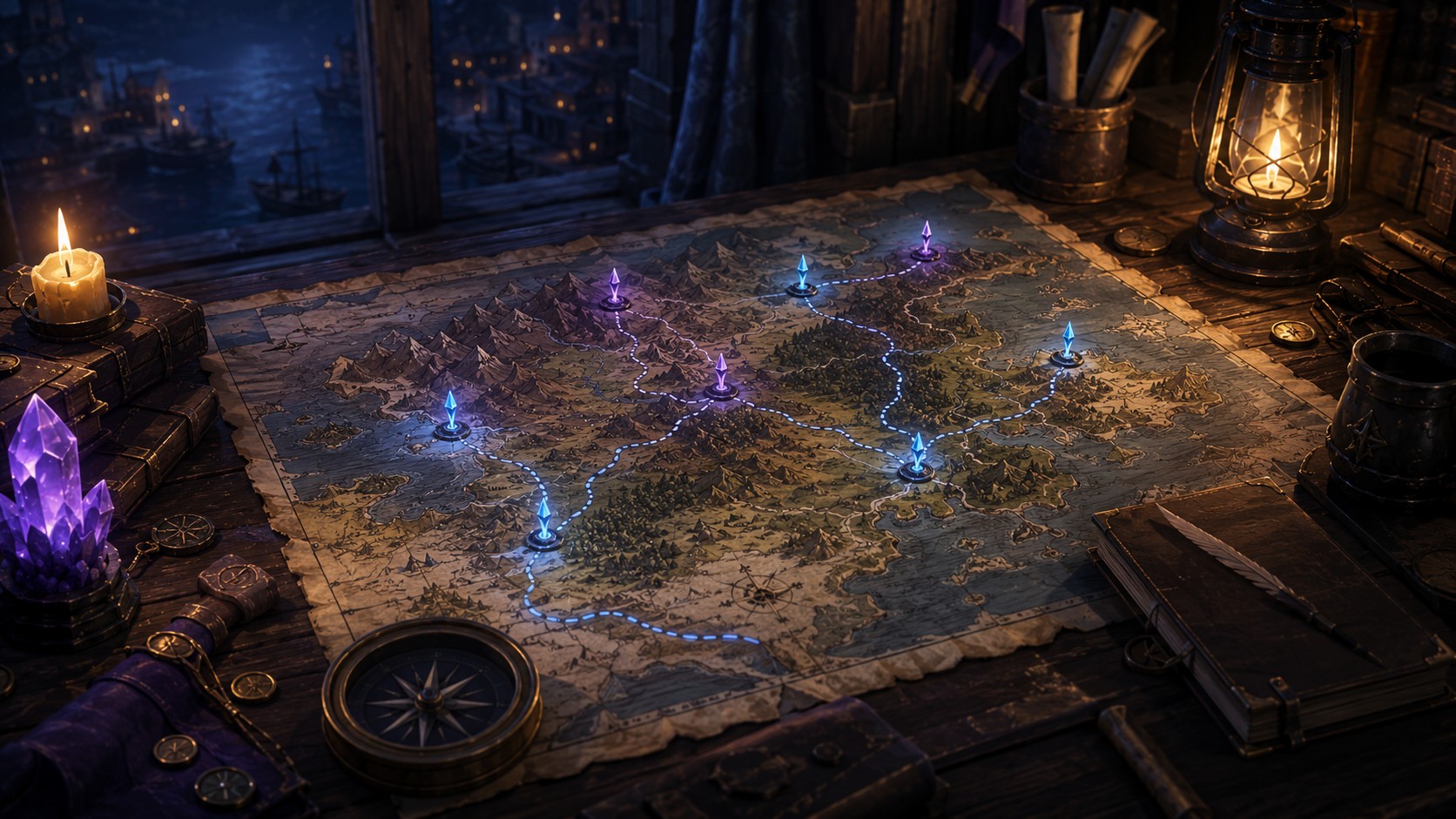
Quick Answer
The Brighter Shores map is best used as a navigation tool, not just as a picture of the world. Each episode has its own connected area, with rooms, paths, shops, quest spots, banks, profession zones, and travel points. For beginners, the most useful approach is to learn the main hub of each area first, then mark important vendors, storage access, and quest locations as you unlock them.
A Brighter Shores interactive map can help when you need to find a specific room, NPC, or profession area quickly, especially in larger zones like Hopeforest and Crenopolis.
If you are still learning the starting areas, use a Brighter Shores beginner guide alongside the map.
How the Brighter Shores Map Works
The Brighter Shores map is divided into episode-based regions. Instead of one open world where every area is available from the start, the game introduces new zones as you progress.
Each area is made from connected rooms. These rooms may contain:
- NPCs
- Shops and merchants
- Quest objectives
- Profession resources
- Banks or storage points
- Combat areas
- Travel connections
This means the brighter shores world map is less about long-distance travel and more about learning routes between useful rooms.
When you open your map, focus on room names. Room names are very important because many quests and guides refer to locations by name. If you are following a quest, check the nearby exits and move room by room instead of trying to travel in a straight line.
For a smoother first route, combine map knowledge with an early game route instead of wandering between zones randomly.
Main Areas in Brighter Shores
Hopeport
Hopeport is the first major area and the best place to learn how brighter shores maps work. It acts as the starting zone and introduces many basic systems.
You will find early quests, basic vendors, profession areas, and important NPCs here. The brighter shores hopeport map is usually the easiest to understand because the area is more compact than later regions.
Hopeport is useful for:
- Learning map movement
- Finding early quest NPCs
- Visiting beginner merchants
- Practicing starter professions
- Getting used to room-based navigation
Beginners should spend time learning the routes between the town center, storage access, training areas, and key shops. This saves a lot of time later.
Once you start moving between areas more often, the teleports and obelisks guide becomes useful for saving travel time.
Hopeforest
Hopeforest is the second major area and feels more spread out than Hopeport. Players often search for a brighter shores hope forest map, brighter shores hopeforest map, or brighter shores forest map because the paths can be harder to remember.
The forest has more branching routes, resource spots, and combat-related locations. It is easy to walk past the room you need if you are not checking room names carefully.
Hopeforest is useful for:
- Forest-based professions
- New quest chains
- Combat progression
- Resource gathering
- Learning longer travel routes
When exploring Hopeforest, move slowly and pay attention to exits. If a quest gives you a room name, use the map to trace a path from a known location instead of wandering randomly.
Mines
The Mines area introduces a more enclosed layout. Players looking for a brighter shores mines map usually want help finding profession spots, quest objectives, or paths through similar-looking rooms.
The Mines can feel confusing because many rooms share a similar theme. Room names matter even more here. Check your map often and create a mental route from the entrance to the most useful locations.
The Mines are useful for:
- Mining-related activities
- Underground quest steps
- Combat encounters
- Resource collection
- Progression into later content
A good habit is to remember a few “anchor rooms.” These are rooms you can easily recognize and use as starting points when navigating deeper into the area.
Crenopolis
Crenopolis is a later area with a more city-like structure. A brighter shores crenopolis map is useful because the area has many NPCs, shops, profession locations, and quest routes.
Unlike Hopeport, where many early locations are close together, Crenopolis can require more careful route planning. You may need to move through several connected rooms to reach one merchant or quest objective.
Crenopolis is useful for:
- Later episode progression
- More advanced vendors
- City-based quests
- Merchant-related activities
- Profession training
For this area, it helps to group locations by purpose. Learn where the shops are, where the quest NPCs are, and where your profession routes begin.
Important Map Locations for Beginners
Beginners should not try to memorize the brighter shores full map immediately. Focus on practical locations first.
The most important locations are:
| Location Type | Why It Matters |
|---|---|
| Banks or storage | Saves travel time when skilling or questing |
| Main quest NPCs | Helps you progress through episodes |
| Profession areas | Needed for training and gathering |
| Combat zones | Used for leveling and quest steps |
| Shops | Needed for tools, supplies, and equipment |
| Travel connections | Help you move between important routes |
The best beginner strategy is to learn one area at a time. In Hopeport, memorize the core town routes first. In Hopeforest, learn the path from the entrance to your main training spots. In the Mines, remember the entrance and key resource rooms. In Crenopolis, learn the merchant and quest areas first.
Vendor and Merchant Locations
Vendor locations are one of the main reasons players use a brighter shores map interactive tool. Merchants can sell useful tools, supplies, ingredients, gear, or profession-related items depending on the area.
The brighter shores merchant map is not one single place. Merchants are spread across different regions. Some are easy to find near central hubs, while others are placed deeper inside specific areas.
When looking for vendors, use this process:
- Open your map.
- Look for named rooms that sound like shops, markets, stalls, or profession buildings.
- Check nearby rooms if the merchant is not in the first place you visit.
- Remember the route from the nearest bank or central hub.
This is especially helpful when you need to buy items repeatedly. A short route between storage and a vendor can save a lot of time.
Quest Locations
For quest-related navigation, use the quest guide together with the map instead of searching each objective separately.
Quest locations in Brighter Shores are usually tied to named rooms and NPCs. If a quest asks you to speak with someone or visit a place, the room name is your biggest clue.
For quest navigation, do not rely only on memory. Open the map and follow connected rooms carefully. Many quests become easier once you understand how the local area is structured.
Useful quest map habits:
- Read the quest text carefully.
- Look for exact room names.
- Check every exit from your current room.
- Return to known hubs when lost.
- Use an interactive map if the target is hard to find.
Some quests may send you back and forth between NPCs, shops, and resource areas. Before starting a long task, check where the nearest storage and vendors are.
Tips for Using the Map Efficiently
Use the Brighter Shores map as a route planner. Do not just open it when you are lost.
Here are the best habits:
- Learn hubs first. Every area has important rooms you will return to often.
- Use room names. They are more reliable than visual memory.
- Plan loops. For skilling, create a route between resources, storage, and vendors.
- Check nearby exits. Some paths are not obvious at first glance.
- Use interactive maps carefully. A brighter shores interactive map is useful, but you should still learn the in-game layout.
- Avoid memorizing everything at once. Focus on the area you are currently using.
- Recheck after updates. Brighter Shores can change over time, so some locations or routes may be adjusted.
If you are new, the best order is simple: learn Hopeport, then Hopeforest, then the Mines, then Crenopolis. This matches how the game teaches navigation and keeps the map from feeling overwhelming.
More Brighter Shores Map and Location Guides
If you are using this map guide to plan your next route, the next step is to open the location guide that matches your current area or goal. The main map guide gives you the overview, but the guides below help with specific regions, travel systems, vendors, and quest locations.
Use these guides if you want to find a region faster, understand travel points, plan vendor routes, or connect map navigation with quests and progression.
| Map or Location Guide | Best For |
|---|---|
| Hopeport Guide | First area, shops, routes, and beginner locations |
| Hopeforest Map Guide | Hopeforest navigation and region planning |
| Mines Map Guide | Mines navigation and related location content |
| Crenopolis Map Guide | Crenopolis navigation and later-region planning |
| Teleports and Obelisks Guide | Faster travel and map movement |
| All Vendor Locations | Shops, vendors, equipment, and supplies |
| Best Vendor Routes | Selling routes and route planning |
| Quest Guide and Quest List | Quest-related locations and walkthroughs |
If your route depends on shops, tools, or selling items, use the vendor locations page and best vendor routes guide together with this map guide.
If you are following quests, the quest guide and quest list can help you connect objectives with the right locations.
FAQ
Is there a Brighter Shores full map?
There are community map tools and guides that show large parts of the game, but Brighter Shores is easier to understand by area. Instead of trying to memorize the full map, learn each episode region separately.
Is there a Brighter Shores interactive map?
Yes, community interactive maps exist and can help you find rooms, NPCs, shops, and profession spots. These are useful when you need a specific location quickly.
What is the best map area to learn first?
Hopeport. It is the starting area and teaches the basic structure of Brighter Shores navigation.
Why is Hopeforest harder to navigate?
Hopeforest has more branching paths and outdoor routes. Room names are very important there, especially when following quests.
Where are merchants in Brighter Shores?
Merchants are spread across different areas. Look for shops, markets, stalls, and profession-related rooms on the map.
Do I need an interactive map to play Brighter Shores?
No, but it helps. The in-game map is enough for normal play, while an interactive map is useful for finding exact rooms or planning faster routes.