
Quick Answer
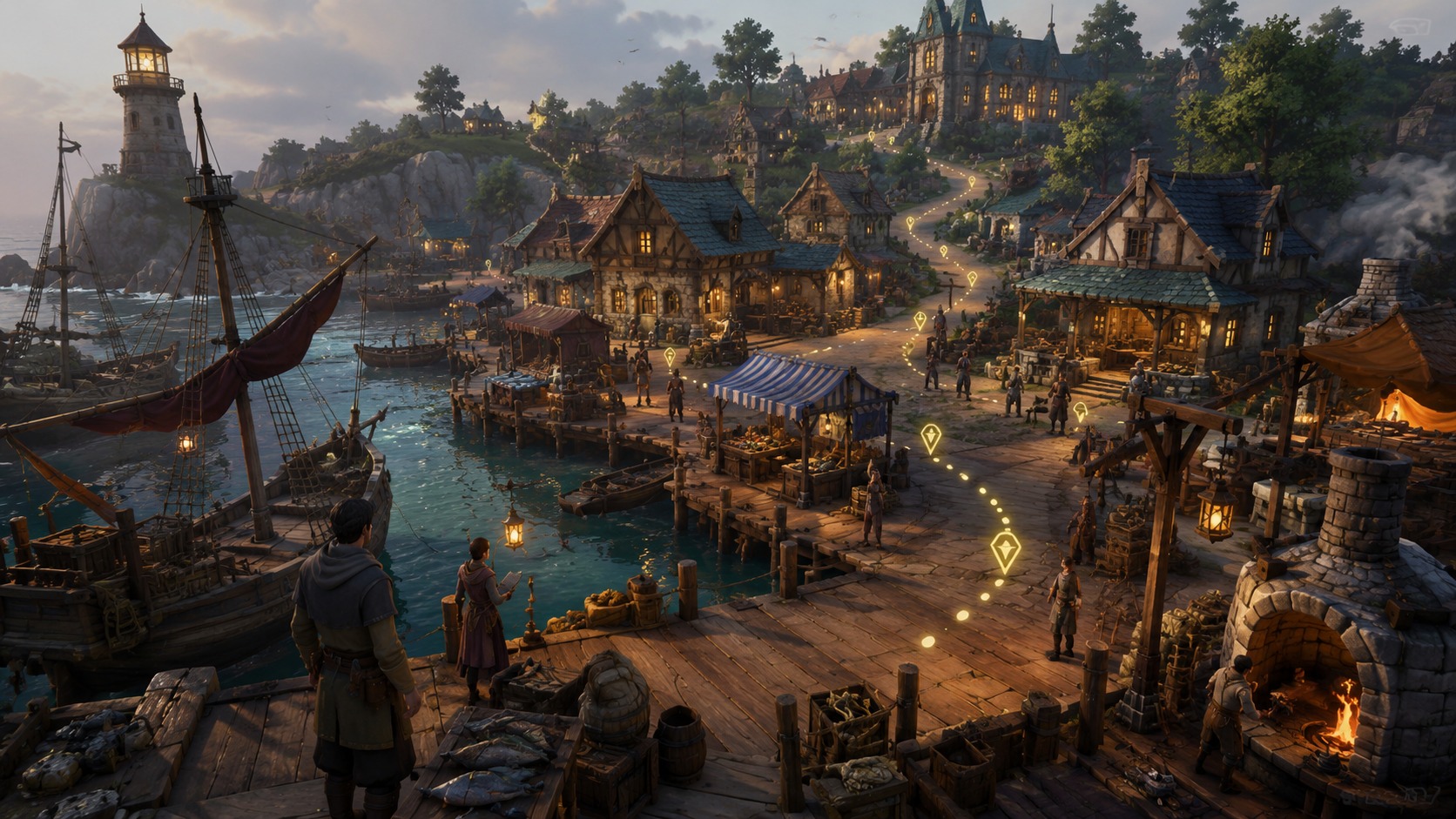
Hopeport is the first main area in Brighter Shores and acts as your beginner hub. It introduces early combat, gathering, fishing, cooking, potion-making, vendors, and basic map navigation. Your main goals in Hopeport are to learn the layout, unlock key professions, use nearby shops, build starter income, and prepare before moving deeper into the game.
Use Hopeport as a training zone. Do not rush through it. Learn where the shops are, keep useful supplies, and follow a simple route between profession areas so you are not wasting time running across town.
What Is Hopeport in Brighter Shores?
Hopeport is the starting town and Episode 1 area in Brighter Shores. It is where new players learn how the game handles zones, professions, enemies, vendors, and quests.
The area is built like a compact town with connected streets, shops, profession buildings, coastal paths, and gates leading to later zones. Because the map is split into smaller rooms and paths, Hopeport can feel confusing at first. Once you understand the main landmarks, it becomes much easier to move around.
Hopeport is important because many early systems start here:
- Basic combat through the Guard profession
- Fishing spots near the water
- Foraging routes around town and nearby paths
- Cooking at the restaurant kitchen
- Alchemy at the Apothecary
- Early equipment selling and supply buying
- Main quest progress before leaving the area
For a wider layout overview, use our Brighter Shores map guide alongside this guide.
Important Hopeport Locations
Hopeport has several locations you should learn early. These places help you progress faster and reduce unnecessary running.
Training Ground
The Training Ground is one of the first places you use for combat. It connects closely to early Guard activities and nearby equipment services. Return here when you want to work on combat or sell some spare gear.
Quartermaster Area
The Quartermaster is useful for equipment-related needs. This is one of the early vendor spots you should remember because you will often collect items from combat that need to be sold or managed.
Apothecary
The Apothecary is the main place for Alchemy in Hopeport. Go here when you want to make potions or work with potion ingredients. This is a useful stop if you are training combat and want to keep supplies ready.
Delectable Dab Restaurant and Kitchen
This is the main cooking area in Hopeport. It is tied to the Chef profession and lets you turn ingredients into meals. Cooking is one of the better early activities because it gives you a clear loop: buy or gather ingredients, cook, then sell or use the results.
Melv’s Fishing Supplies
This area supports the Fisher profession. Visit it when you want to start fishing or manage fishing-related supplies. Fishing is a simple early profession because it gives you a calm resource loop near the coast.
Forager’s Warehouse
This location is useful for the Forager profession. If you are collecting plants, shells, herbs, or other gathered items, this is one of the key places to know.
Town Gates
The gates are important once you are ready to leave Hopeport and move into the next area. Do not treat the gates as your first goal. It is better to understand Hopeport and build a small base of progress before leaving.
Hopeport Vendors and Shops
Hopeport vendors make early progression much easier. You will use them to buy supplies, sell spare items, and support your professions.
Important early vendor types include:
| Vendor or Shop | Main Use |
|---|---|
| Quartermaster | Equipment selling and gear-related needs |
| Apothecary | Potion crafting and potion supplies |
| Cooking ingredient vendor | Ingredients for Chef training |
| Fishing supply vendor | Fishing tools and related supplies |
| Forager-related vendor | Helps with gathered materials |
| Cloakroom | Storage and outfit-related use |
| Enchantress Shop | Useful for item services as you progress |
Vendor routes matter because Hopeport has many small connected areas. Once you know where each shop is, you can sell items faster and avoid running in circles.
For a full list, use our vendor locations guide. For faster selling paths, see the vendor routes guide.
Best Early Activities in Hopeport
The best early activities in Hopeport are the ones that teach useful systems while giving you steady progress.
Train Guard
Guard is your first combat profession in Hopeport. Use it to learn enemy fights, gear handling, and basic combat movement. Keep your inventory under control so you are not forced to stop too often.
Try Fishing
Fishing is easy to start and useful when you want a slower activity. It also helps you learn the waterfront side of Hopeport.
Gather Foraging Items
Foraging is good because it encourages you to explore different streets and outdoor areas. Pick up useful resources when they are on your route, but avoid filling your inventory with items you do not plan to use or sell.
Start Cooking
Cooking gives Hopeport a strong early money and profession loop. You can work with ingredients, make food, and learn how production skills work.
Make Potions
Alchemy is useful if you plan to train combat or want to understand crafting systems early. Potions can support your progress, especially when you are spending more time fighting.
For a simple step-by-step path, follow our early game route.
Hopeport Professions and Skills
Hopeport introduces five main Episode 1 professions:
| Profession | What It Does |
|---|---|
| Guard | Combat in Hopeport |
| Fisher | Catching fish |
| Forager | Gathering natural items |
| Chef | Cooking meals |
| Alchemist | Making potions |
A good beginner approach is to try each one instead of only focusing on one skill. This helps you understand how the game connects resources, shops, and routes.
Guard is useful for combat confidence. Fisher and Forager are simple gathering skills. Chef and Alchemist teach production and supply planning. Together, they make Hopeport feel less like a tutorial and more like a full beginner hub.
Hopeport Routes for Beginners
A simple beginner route should connect combat, selling, supplies, and one gathering activity.
Try this basic loop:
- Start near the Training Ground.
- Train Guard or complete nearby combat tasks.
- Sell spare equipment at the Quartermaster.
- Move toward the Apothecary or restaurant area.
- Train Alchemist or Chef for a short session.
- Head toward the waterfront for fishing.
- Pick up foraging items only when they fit your path.
- Return to town shops to sell or restock.
This route works because it keeps you near useful vendors and avoids long empty runs. As you learn the town, you can adjust the loop around your favorite profession.
For broader starting tips, read our Brighter Shores beginner guide.
What to Do Before Leaving Hopeport
Before leaving Hopeport, make sure you have done the basics:
- Learn where the main shops are
- Try all Hopeport professions at least once
- Sell spare equipment and unwanted items
- Keep useful potions or food if you have them
- Understand how to reach the gates
- Finish any required early quest steps
- Build a small amount of coins for supplies
You do not need to max anything before leaving. The goal is to be comfortable. If you can move around Hopeport without checking every path, know where to sell items, and understand the five early professions, you are ready to continue.
More Brighter Shores Hopeport and Beginner Guides
If you are using this Hopeport guide to understand the first major area, the next step is to connect Hopeport with beginner progression, maps, vendors, tools, storage, quests, travel, and early money routes. Hopeport is easier to navigate when you know where the shops are, which routes matter, and which support guides to open next.
Use these guides if you want to move from Hopeport basics into practical progression steps.
| Related Guide | Best For |
|---|---|
| Beginner Guide | Learning what to do first as a new player |
| Brighter Shores Map Guide | Understanding locations and route planning |
| Teleports and Obelisks Guide | Moving around faster and planning travel |
| All Vendor Locations | Finding shops, vendors, equipment, and supplies |
| Best Vendor Routes | Planning faster selling routes in Hopeport |
| Tool Locations Guide | Finding useful early tools |
| Bank and Storage Guide | Managing items, storage, and inventory |
| Quest Guide and Quest List | Choosing quests and walkthroughs |
| Quest Items Guide | Knowing what quest items to keep |
| Money Making Guide | Learning early and mid-game gold routes |
| Early Game Gold Route | Planning a beginner-friendly gold route |
| Leveling Guide | Planning faster early progression |
If you are new, start with the Beginner Guide and Brighter Shores Map Guide so Hopeport feels easier to understand.
If your goal is early gold, use the Money Making Guide together with Best Vendor Routes and All Vendor Locations.
FAQ
Is Hopeport the starting area in Brighter Shores?
Yes. Hopeport is the first main area and beginner hub. It introduces early professions, shops, combat, and town navigation.
What professions are in Hopeport?
Hopeport includes Guard, Fisher, Forager, Chef, and Alchemist. These are the main early professions for Episode 1.
What should I do first in Hopeport?
Start by following the early quests, learning the Training Ground, finding the main vendors, and trying one or two professions. Do not rush to leave before you understand the town layout.
Are Hopeport vendors important?
Yes. Vendors help you sell spare items, buy supplies, and support professions. Learning their locations saves a lot of time.
Should I level every Hopeport profession?
You do not need to heavily level every profession right away. Try each one, then focus on the activities you enjoy or need for your current goal.