
Quick Answer
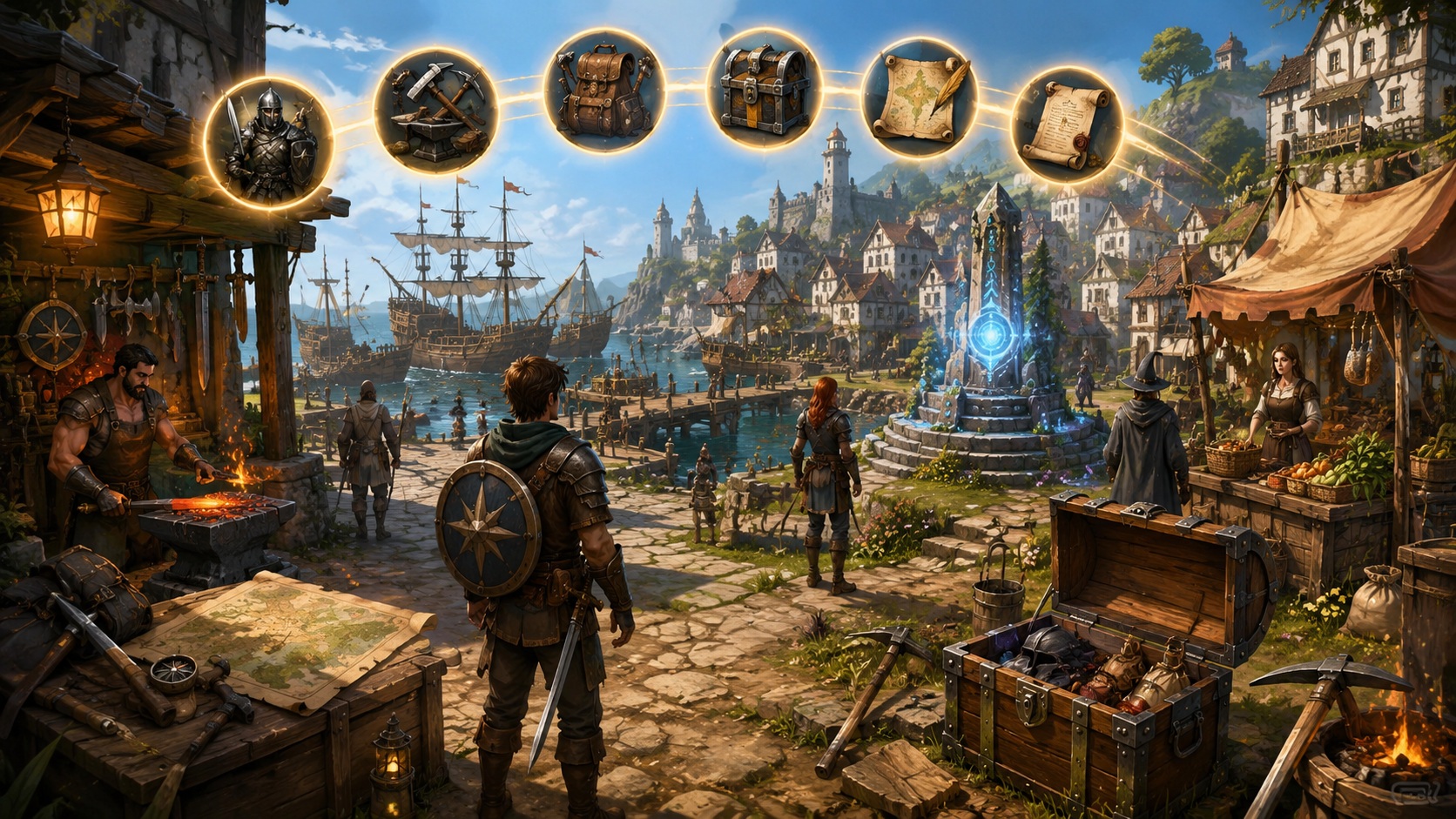
Brighter Shores is built around separate regions, episode-based progression, combat professions, gathering professions, crafting professions, vendors, tools, storage, quests, and teleports. New players should understand that most activities are tied to a specific profession, many systems unlock as you explore new areas, and your map is one of the most important tools for finding shops, quest locations, banks, and travel points.
This guide explains the main brighter shores beginner mechanics so you can understand how the game works without turning this into another “what to do first” checklist.
Core Mechanics New Players Should Understand
Brighter Shores is not only about fighting monsters. The game is structured around episodes, with each episode adding its own areas, quests, professions, and progression systems. The official site describes the game as expanding through episodes, with each episode adding side quests, professions, lands, and story progress.
The key idea is simple: almost everything you do belongs to a system.
Combat uses combat professions. Gathering uses gathering professions. Cooking, alchemy, carpentry, and other activities use their own profession systems. Shops are not just random NPCs; many of them support specific professions. Storage is not just a convenience; it helps you manage materials across long training sessions.
New players should think of Brighter Shores as a set of connected systems:
| System | What It Does |
|---|---|
| Classes | Defines your combat identity later in the game |
| Professions | Main leveling system for combat, gathering, and crafting |
| Tools | Let you gather, process, or interact with profession items |
| Vendors | Sell tools, ingredients, gear, and profession supplies |
| Storage | Keeps materials and items organized |
| Map | Helps you find rooms, exits, shops, banks, and objectives |
| Teleports | Reduce travel time after unlocks |
| Quests | Unlock areas, introduce systems, and reward progression |
For a broader first-start route, use the Brighter Shores beginner guide. This article is focused on how the systems work.
Classes and Combat Basics
Combat in Brighter Shores starts simply, but it becomes more structured as you progress. Early on, you fight enemies, equip better gear, and level the relevant combat profession for the area you are in.
The important beginner mechanic is that combat progression is not one universal level for the entire game. Brighter Shores uses profession-based progression, and combat is part of that structure. Different areas can have their own combat profession, so do not assume that one early combat level explains your whole account forever.
Your class choice matters because it shapes your combat identity. However, new players should not treat it like a permanent mistake waiting to happen. The better approach is to understand what each class is trying to do, then choose the one that fits your preferred playstyle.
In simple terms:
| Class Type | Best For Players Who Like |
|---|---|
| Defensive or sturdy styles | Safer fights and forgiving combat |
| Damage-focused styles | Faster kills and more active risk management |
| Magic or special styles | A different combat feel and ability flavor |
For a deeper breakdown, see the Brighter Shores classes guide.
Professions and Skills
Professions are one of the most important beginner mechanics in Brighter Shores. They cover combat, gathering, crafting, processing, and support activities.
A profession usually works like this:
- You find the correct area or activity.
- You use the required tool, station, or item.
- You gain profession experience.
- Higher levels unlock more actions, items, enemies, or recipes.
For example, fishing is not the same as cooking, and gathering is not the same as alchemy. Each profession has its own training loop. Some professions produce materials. Others consume materials. Some help you make items that support another activity.
This is why you should avoid thinking of professions as isolated grinds. A fish may become cooking material. A gathered item may become an alchemy ingredient. A crafted item may support another part of your progression.
A simple beginner way to understand professions:
| Profession Type | Main Purpose |
|---|---|
| Combat | Fight enemies and progress through dangerous areas |
| Gathering | Collect raw materials |
| Processing | Turn raw materials into usable items |
| Crafting | Create finished items or useful supplies |
| Support | Help other professions or progression systems |
For more detail, use the professions guide for beginners.
Tools, Vendors, and Storage
Tools are required for many profession activities. If you cannot perform an action, the reason is often simple: you are missing the correct tool, using the wrong area, or trying an activity your profession level does not support yet.
Vendors are also part of the mechanics, not just background NPCs. Shops can sell tools, ingredients, gear, potions, or profession supplies. Some vendors also buy specific items, which helps you clear inventory space and turn excess materials into money.
A useful rule for beginners is:
Check the nearby vendor when you enter a new profession area.
That vendor often explains what the local system expects from you. If you are near a fishing area, look for fishing supplies. If you are near a cooking activity, look for ingredient vendors or cooking-related shops.
Storage matters because Brighter Shores can fill your inventory quickly. Materials, gear, tools, potions, quest items, and profession items all compete for space. Instead of carrying everything, learn where storage is and use it often.
Good storage habits:
- Store materials you are not using right now.
- Keep tools you regularly need.
- Sell obvious spare gear or unwanted drops.
- Do not destroy items unless you are sure they are easy to replace.
- Use storage before long profession sessions.
For specific locations, use the tool locations guide and the bank and storage guide.
Map, Teleports, and Travel
The map is one of the most important beginner tools in Brighter Shores. The game is divided into many connected rooms and paths, so navigation can feel confusing until you learn to read the map properly.
Use the map to check:
- Room names
- Exits
- Nearby shops
- Quest locations
- Banks or storage
- Profession areas
- Travel routes
A common beginner mistake is trying to memorize everything too early. You do not need to. Open the map often and use room names as landmarks.
Teleports and obelisks are another major travel mechanic. They help reduce repeated walking after you unlock or activate the right points. This becomes more valuable as you move between profession areas, vendors, quest objectives, and storage.
Travel in Brighter Shores is about building a mental route:
Start point → vendor or bank → profession area → storage → quest or next unlock.
Once teleports are available, they become part of that route. For more help, see the teleports and obelisks guide.
Quests and Progression
Quests are not only story content. They also teach systems, introduce areas, unlock access, and push you toward new mechanics.
A beginner should treat quests as progression tools. If you feel stuck, check your quest list and map before assuming you need to grind. Sometimes the next step is not more levels, but talking to the right NPC, entering a specific room, or using the correct item.
Quests can involve several mechanics at once:
| Quest Requirement | What It Teaches |
|---|---|
| Talk to NPCs | How local story and vendors connect |
| Find locations | How to use the map |
| Gather items | How profession materials work |
| Fight enemies | How combat scaling works |
| Use tools | How profession actions work |
| Unlock paths | How area progression works |
Do not skip quest text too quickly. Brighter Shores often uses dialogue and objective wording to point you toward the correct mechanic.
For a full quest overview, use the Brighter Shores quest guide.
Common Beginner Mechanics Mistakes
The biggest mistake is treating Brighter Shores like a single-level RPG. Your progress is spread across professions, areas, tools, quests, and unlocks. If one system feels blocked, another system may be the real answer.
Another common mistake is ignoring vendors. Many new players run past shops, then wonder why they cannot train a profession properly. Vendors often sell the tool or supply that makes the nearby activity work.
Inventory management is another early problem. Carrying too much gear, too many materials, and too many random items makes every activity slower. Use storage before your inventory becomes full.
New players also waste time walking because they forget about teleports or do not activate travel points when they become available. Any time the game introduces an obelisk or teleport-style mechanic, pay attention. It usually saves time later.
Finally, do not over-focus on one profession before understanding how it connects to the rest of the game. Some professions are more useful when paired with others. Learning the system is more important than rushing one level number.
Need a broader overview of the game? Visit the main Brighter Shores hub for beginner guides, profession help, money making routes, skill leveling tips, vendor locations, quests, maps, and other core mechanics.
FAQ
What are the most important Brighter Shores beginner mechanics?
The most important mechanics are professions, tools, vendors, storage, map navigation, quests, combat progression, and teleports. These systems control how you train, travel, unlock content, and manage items.
Are classes the same as professions?
No. Classes are tied to your combat identity, while professions are the broader skill system used for combat, gathering, crafting, and other activities.
Why can’t I gather or craft something?
You may be missing the right tool, standing in the wrong location, lacking the required profession level, or missing a required material. Check nearby vendors and read the action requirement carefully.
Should I keep all materials?
Not always. Store materials that seem useful, especially profession items and ingredients. Sell or clear obvious spare items when storage and inventory space become a problem.
How do I travel faster?
Use the map, learn key routes, and unlock teleport or obelisk points when available. Travel gets easier once you stop walking every route manually.
Are quests required for progression?
Many quests help unlock areas, explain systems, or guide you toward important mechanics. Even when they are not strictly required for a specific activity, they are useful for understanding how the game works.