
Quick Answer
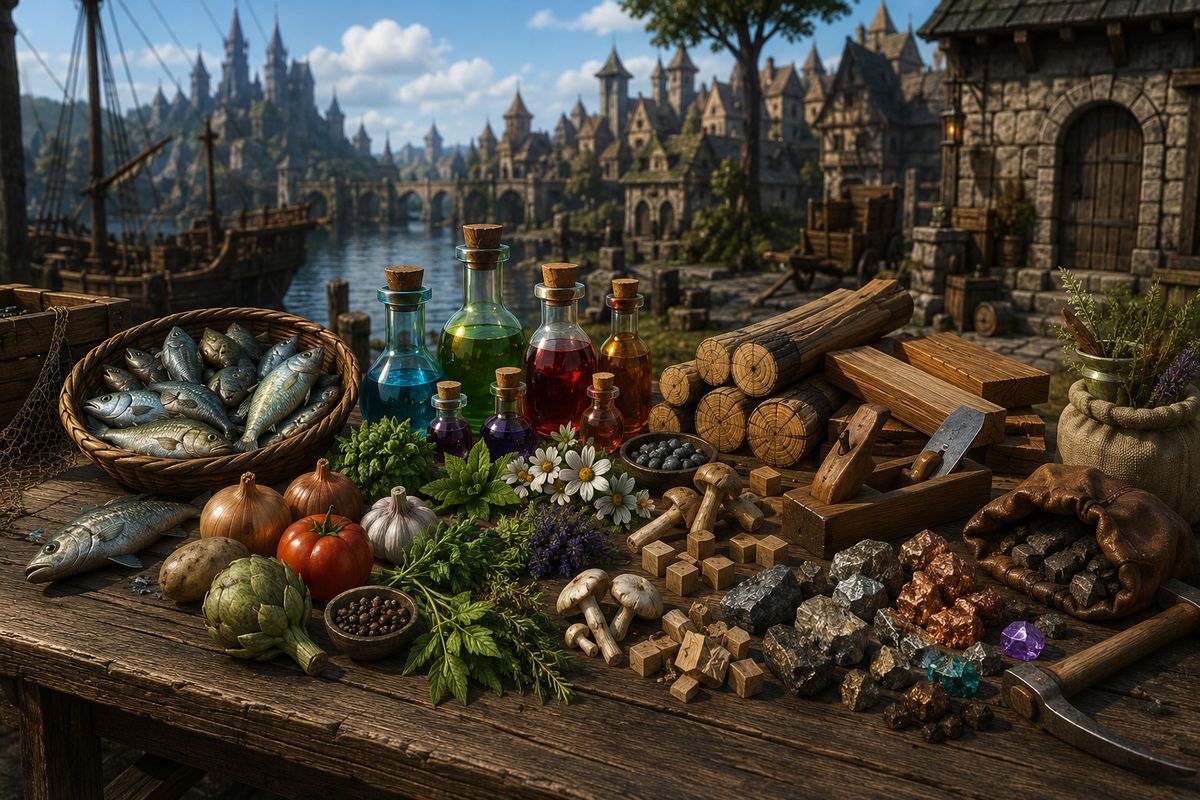
The best Brighter Shores materials to farm and sell are materials that are easy to gather, used often, and close to a bank, shop, or crafting station. For most players, the safest options are alchemy ingredients, fish, cooking ingredients, logs, and carpentry materials.
Do not chase only the highest sale price. A material is usually worth farming when you can collect it quickly, use it for profession progress, and sell the extra without wasting travel time.
For steady money, combine this guide with a wider gold farming guide or build simple repeatable money loops around the professions you already train.
Best Materials at a Glance
Use this quick table if you want to decide what to farm based on your current goal.
| Material Type | Best For | Sell or Keep? | Why It Works |
|---|---|---|---|
| Alchemy ingredients | Potions and long-term utility | Keep useful ingredients, sell extras | They support Alchemy progression and can reduce potion crafting costs. |
| Fish | Early money and Cooking support | Sell raw for quick coins or cook for XP | Fishing is simple, repeatable, and beginner-friendly. |
| Cooking ingredients | Simple early recipes | Keep if you are cooking soon | They work well in short repeatable money loops. |
| Logs and wood | Woodcutting and Carpentry | Keep if training Carpentry, sell overflow | They support long-term crafting and profession progress. |
| Processed materials | XP plus coins | Sell when the route is efficient | Processed items can be better than raw materials when crafting time is worth it. |
Best Materials to Farm and Sell
The best materials are not always the rarest ones. In Brighter Shores, common materials can be better because you gather them faster and use them in more recipes.
Good materials to farm usually fall into these groups:
| Material Type | Why It Is Useful | Best For |
|---|---|---|
| Alchemy materials | Used for potions and profession progress | Utility and steady demand |
| Fish | Can be sold or used in cooking | Early money and Cooking |
| Cooking ingredients | Simple repeatable recipes | Beginner profit loops |
| Logs and wood | Used for Woodcutting and Carpentry | Long-term crafting |
| Processed items | Often sell better than raw materials | Players who want XP and coins |
The best choice depends on your current episode, unlocked areas, profession levels, and nearby vendors. Prices and routes can change after updates, so treat exact coin values as something to check in-game.
What Makes a Material Worth Farming?
A material is worth farming when it saves time or creates value. Before farming anything for a long session, check four things.
First, check how fast you can gather it. A lower-value item near a convenient route can beat a higher-value item that takes too long to reach.
Second, check whether it has a use. Materials used in potions, meals, or crafting are safer than items with only vendor value.
Third, check the travel time. If you spend too much time walking between the farming spot and the selling point, your profit drops.
Fourth, check whether you also gain useful profession XP. The best farms help you make money while improving skills you already need.
Should You Farm, Process, or Sell Materials?
The best choice depends on whether you need quick coins, profession XP, or long-term supplies. Do not treat every material the same way.
| Situation | Best Choice | Reason |
|---|---|---|
| You need coins right now | Sell raw materials | This is faster and avoids extra crafting time. |
| You are leveling a related profession | Process materials first | You gain XP and may create a more useful finished item. |
| The material is used in Alchemy or Cooking soon | Keep a useful stack | Selling now may force you to buy the same material later. |
| Your storage is full | Sell overflow | Keep only what supports your next route or crafting plan. |
| The route is slow or far from vendors | Switch materials | Travel time can ruin the value of a high-price material. |
Early Materials for Beginners
Beginners should focus on simple materials that do not require complicated routes or high profession levels. The goal is steady progress, not perfect profit.
Good early materials include:
- Basic fish
- Common cooking ingredients
- Early alchemy ingredients
- Low-level logs
- Materials near shops, banks, or workstations
Early fish are useful because they can often be sold directly or moved into Cooking. This gives you two options: sell for quick coins or cook them for extra profession progress.
Cooking ingredients are also beginner-friendly because they can support simple repeatable recipes. Even when the profit is small, you gain Cooking XP and learn which recipes are easy to repeat.
Early logs are useful if you plan to train Woodcutting and Carpentry. They may not always feel exciting, but they help build a stockpile for later crafting.
For pure beginner money, avoid farming materials that require long travel or slow gathering. A simple nearby loop is usually better.
Alchemy Materials
Alchemy materials are some of the most useful materials to farm and sell because potions have practical value. Players need potions for training, combat, and general convenience, so alchemy supplies tend to stay relevant.
The best alchemy materials are the ones used in recipes you can make often. Instead of collecting random herbs or ingredients, choose a potion recipe, gather what it needs, then craft in batches.
This is usually better than buying every ingredient from shops, because bought materials reduce your profit. Farming at least part of the recipe yourself keeps costs lower.
A simple alchemy loop looks like this:
- Pick one useful potion recipe.
- Gather the required materials.
- Buy only the ingredients that are slow to collect.
- Craft several potions at once.
- Keep the potions you need and sell the extra.
For a deeper route-based breakdown, use the Alchemy materials farming guide. If you are missing a specific ingredient, check where to buy alchemy materials instead of wasting time searching blindly.
Fishing and Cooking Materials
Fishing and Cooking work well together because fish can become either direct money or cooking supplies. This makes them strong for players who want simple, repeatable farming.
Fish are good to farm when the fishing spot is close to a cooking area or vendor. If the route is short, you can gather fish, cook them, and sell the finished food without much downtime.
Cooking materials are worth farming when they are part of recipes you can repeat easily. A recipe with modest profit can still be good if it is fast, simple, and gives useful Cooking XP.
Raw fish may be better when you want quick selling. Cooked food may be better when you also want profession progress. The right choice depends on your goal.
Use this rule:
| Goal | Better Choice |
|---|---|
| Fast coins | Sell raw or easy-to-gather materials |
| Cooking XP | Cook fish and ingredients |
| Balanced progress | Farm fish, cook in batches, sell extras |
Avoid overcomplicating early Cooking. The best loops are usually the ones you can repeat without checking too many shops.
Woodcutting and Carpentry Materials
Woodcutting and Carpentry materials are good for players who want long-term value. Logs can be sold, stored, or processed into Carpentry items depending on what you have unlocked.
Raw logs are simple. You cut them, move them, and sell or save them. Processed wood and carpentry products can be better if they give useful XP and sell for more than the raw materials.
Before processing logs, compare the time cost. If crafting takes too long or needs extra bought materials, selling the raw logs may be easier. If the crafting route is smooth, processing can be better.
Woodcutting is also a good profession to train while doing something low-stress. It is not always the fastest money, but it builds useful supplies.
When to Sell Materials
Sell materials when you need coins, when your storage is getting crowded, or when the material no longer supports your current training plan.
Keep materials when they are used in potions, recipes, or crafting items you will make soon. Selling everything too early can force you to buy the same materials back later.
A good habit is to split your materials into three groups:
| Group | What to Do |
|---|---|
| Needed soon | Keep |
| Extra stock | Sell |
| Unsure | Keep a small stack, sell the rest |
Also remember to check nearby shops and vendor locations before planning a route. A good farming spot is much stronger when the selling point is close.
Common Farming Mistakes
The biggest mistake is farming only by item price. A material with a higher sell value can still be worse if it takes too long to collect.
Another mistake is ignoring profession XP. If two materials make similar money, choose the one that helps a useful profession.
Do not buy too many ingredients without checking your profit. Buying supplies can save time, but it can also remove most of the value from a crafting loop.
Avoid changing farms too often. Test a route for a short session, then decide if it is worth repeating. Constantly switching materials wastes time.
Finally, do not hoard everything. Keeping useful materials is smart, but filling storage with items you never use slows you down.
FAQ
What are the best Brighter Shores materials to farm and sell?
The best materials are usually alchemy ingredients, fish, cooking ingredients, logs, and materials used in repeatable crafting. The best option depends on your level, unlocked areas, and nearby vendors.
Should I sell raw materials or process them first?
Process them if the recipe gives useful XP and the finished item is worth the time. Sell raw materials if you need quick coins or if processing requires too much travel or extra cost.
Are alchemy materials worth farming?
Yes. Alchemy materials are useful because potions have practical value. Farming your own ingredients can reduce costs and make potion crafting more reliable.
Is fishing good for money?
Fishing can be good early money because it is simple and repeatable. It becomes better when you combine it with Cooking or use a short route between the fishing spot, cooking area, and vendor.
Should beginners farm rare materials?
Usually no. Beginners are often better farming common materials quickly. Rare materials can be useful later, but slow routes are not always good money.
When should I stop farming a material?
Stop when the route feels slow, the material no longer helps your profession goals, or you have enough stock for your next crafting session.