
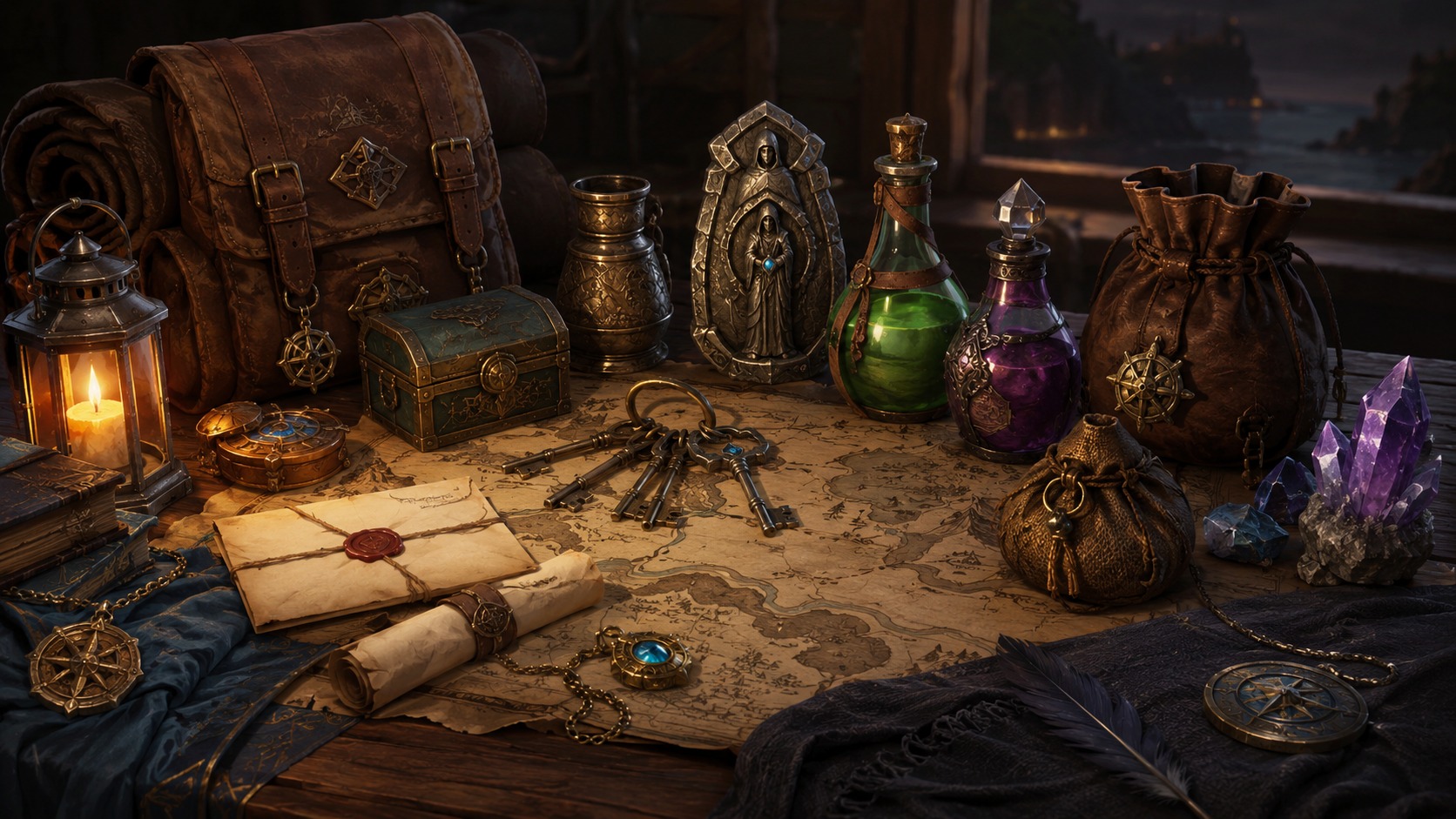
Quick Answer
In Brighter Shores, quest items are objects, materials, tools, or drops that may be needed to start, progress, or finish a quest. Some are clearly marked by the game, while others look like normal resources at first.
Do not sell unusual items too quickly, especially if you found them during a quest, received them from an NPC, or gathered them after a quest hint. When in doubt, store the item, check your quest log, revisit the NPC, or compare your progress with a full Brighter Shores quest guide.
How Quest Items Work in Brighter Shores
Quest items in Brighter Shores usually fall into a few simple groups.
Some are direct quest objects. These are items given by NPCs, found in specific locations, or picked up during a quest step. They normally have an obvious connection to the quest.
Other items are normal materials that may be needed for a quest. These can include gathered resources, crafted items, food, potions, or profession-related supplies. These are easier to sell by mistake because they may not look special.
There are also tools and access-related items. These may help you interact with a certain object, reach a new area, or complete a task for an NPC.
The safest rule is simple: if an item appears while you are actively doing a quest, keep it until the quest is complete.
Brighter Shores also uses episodes, professions, and area progression. This means a quest item or material may only make sense in the zone where the quest happens. For main story progress, use a Brighter Shores main quest guide if you are unsure which items matter for your current step.
Important Quest Items to Watch For
Not every important item is rare or expensive. Some useful quest items can look ordinary. Pay attention to these types of items:
| Item type | Why it matters |
|---|---|
| NPC-given items | Usually tied to a specific quest step |
| Strange drops | May be needed for a later objective |
| Gathered materials from a quest area | May match an NPC request |
| Crafted or cooked items | Some quests may ask for prepared goods |
| Potions or ingredients | Could be linked to profession progress |
| Notes, keys, papers, or clues | Often point to the next location |
| Tools or equipment | May be needed to interact with objects |
If the item has a unique name, came from a quest NPC, or was found after following a clue, do not sell it until you know its purpose.
For location-based clues, a Brighter Shores map guide can help you return to the right area without wasting time.
Items You Should Not Sell Too Quickly
The biggest mistake is treating every item as spare inventory clutter. Brighter Shores has many resources, and it is normal to sell extras, but you should pause before selling anything connected to current quests.
Be careful with:
- Items received from named NPCs
- Materials gathered after a quest asks you to search an area
- Items that have unusual names compared to normal resources
- Anything picked up inside or near a quest location
- Crafted items made because an NPC requested something
- Ingredients that took extra steps to obtain
- Items related to a new profession tutorial
You can usually sell common resources once you understand what they are for. However, if you are still early in an episode or working through several quests at once, it is better to store suspicious items first.
This is especially true when a quest has vague wording. If an NPC says they need a certain kind of material, tool, food, or ingredient, the item may not always be obvious at first glance.
For shops and selling routes, check a vendor selling / vendor locations guide before clearing your inventory.
Quest Items and Storage
Storage is your best protection against losing useful items. If you are not sure whether something is safe to sell, put it in storage instead.
A good storage habit is to keep a small “quest safety” group of items. This should include anything that looks unique, anything from an NPC, and anything you collected while following quest instructions.
Use storage when:
- Your inventory is full but the item might be important
- You are switching between quests
- You are leaving an episode area
- You found an item but do not know its use yet
- You are gathering materials for later crafting or quest steps
Try not to carry every possible item with you. That makes inventory management harder and can slow down normal skilling. Store uncertain items, sell clear duplicates, and keep your active inventory focused on the quest you are doing now.
For more help with space management, use a bank and storage guide.
What to Do If You Are Missing an Item
If you think you sold, dropped, or lost a quest item, do not panic. First, check your storage. Many players forget that they moved an item earlier while freeing inventory space.
Next, reread the quest text. Look for the exact wording. The game may be asking for a category of item, not one specific object. For example, it may point you toward a profession, NPC, shop, or location instead of naming the item directly.
Then revisit the NPC connected to the quest. Some quest items can be replaced, re-earned, or triggered again by speaking to the right character. This depends on the quest, so do not assume every item is permanently gone.
You should also return to the location where you found the item. If it was a ground object, enemy drop, or gathered material, it may be possible to obtain another one.
Use this checklist:
- Check storage.
- Check your active quest text.
- Talk to the quest NPC again.
- Return to the original location.
- Check nearby vendors.
- Review the related quest guide.
If the item was a normal material, you may simply need to gather or buy another copy.
Common Quest Item Mistakes
The most common mistake is selling items too early. Players often clear inventory after skilling, then later discover one of those items may be needed for a quest.
Another mistake is mixing quest materials with normal training materials. If you are gathering for a quest, keep those items separate in your mind. Do not immediately sell everything after a skilling session.
Players also sometimes ignore NPC dialogue. Quest text often gives the strongest clue about whether an item matters. Skipping the text can make normal objects seem random.
A fourth mistake is leaving items in storage and forgetting them. If a quest will not progress, check storage before assuming the quest is bugged.
Finally, do not rely on item value alone. A cheap or common item may still be needed for a step. Quest usefulness and shop value are not the same thing.
More Brighter Shores Quest and Item Guides
If you are using this Quest Items guide to decide what to keep, use, store, or sell, it helps to connect quest items with walkthroughs, vendors, storage, tools, and map routes. Quest items can be easy to overlook, so it is worth checking the right support guide before removing anything from your inventory.
Use these guides if you want to connect quest items with quest walkthroughs, vendor locations, storage decisions, tools, maps, and beginner progression.
| Related Guide | Best For |
|---|---|
| Quest Guide and Quest List | Finding the right quest walkthrough |
| Main Quest Guide | Following the main quest path |
| All Vendor Locations | Checking vendors, shops, and supplies |
| Bank and Storage Guide | Deciding what to keep, store, or sell |
| Tool Locations Guide | Finding tools and useful quest-related items |
| Brighter Shores Map Guide | Finding locations connected to quest steps |
| Beginner Guide | Learning what to do first as a new player |
| Missing Fisherman Quest Guide | Help with the Missing Fisherman quest |
| The Lost Shipment Quest Guide | Help with The Lost Shipment |
| Nullify the Corruption Guide | Help with corruption-related objectives |
If you are unsure whether an item is still useful, check the Quest Guide and Quest List and Bank and Storage Guide before selling or dropping it.
If the item is tied to a location, use the Brighter Shores Map Guide together with All Vendor Locations to find the right area or shop.
FAQ
Are quest items marked in Brighter Shores?
Some important items are easy to recognize, but not every useful quest material will feel special. Normal resources may also be needed for quests, so pay attention to where and why you obtained the item.
Can I sell normal materials?
Yes, but be careful if you are currently working on a quest that mentions those materials, a related profession, or the area where you found them. Store uncertain items first.
What should I do before selling items?
Check your quest log, think about where the item came from, and store anything unusual. If the item came from an NPC or quest area, keep it until the quest is finished.
Can lost quest items be recovered?
Sometimes you may be able to get another copy by revisiting the NPC, returning to the location, gathering the material again, or buying it from a vendor. It depends on the item and quest.
Should I keep all quest materials forever?
No. Once a quest is complete and the item is clearly not needed anymore, you can usually clear space. Until then, storage is safer than selling.