
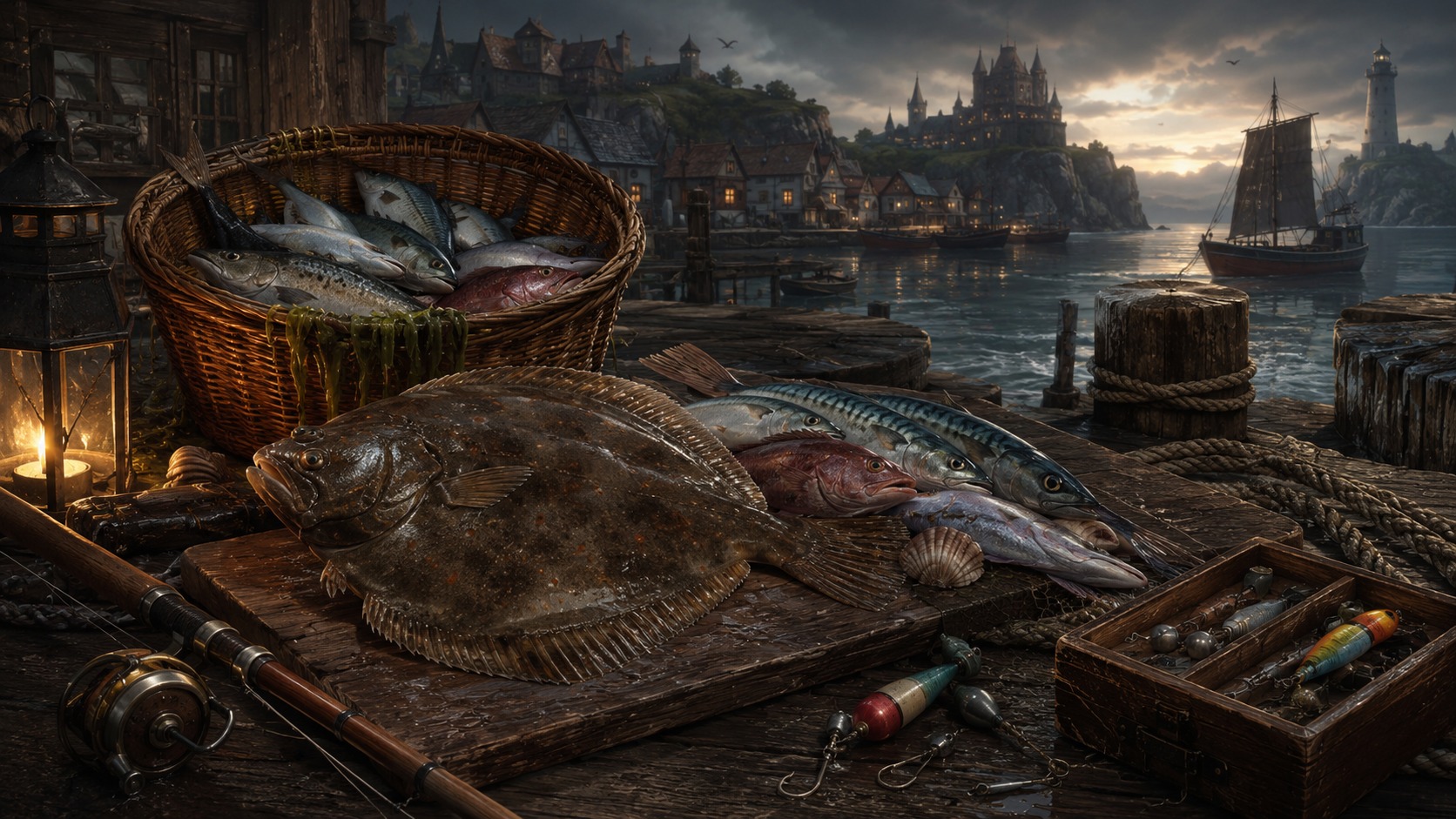
Quick Answer
Fetid Flounder in Brighter Shores is a fish item players search for when working through Fishing, Cooking, selling decisions, or item-related progression. If you do not need Fetid Flounder for a current recipe, task, or objective, it is usually safe to sell extra fish for coins.
This guide explains how fish and flounder items work in Brighter Shores, when to keep them, when to sell them, and what to check if you are stuck looking for Fetid Flounder or similar fish.
Flounder is one of the fish players often search for because it appears in early Fishing progression and may be connected to Cooking or selling decisions. Unless you need flounder for a specific recipe, task, or progression goal, it is usually safe to sell extra flounder for money.
For a full Fishing overview, see the Fishing guide. If your goal is profit, use the Fishing money making guide.
Fetid Flounder in Brighter Shores
Fetid Flounder is one of the specific fish names players look up in Brighter Shores because it can be easy to confuse regular fish, flounder items, Cooking ingredients, and sellable Fishing drops. If you are trying to find or use Fetid Flounder, first check your current Fishing area, Cooking recipes, quest log, and inventory before assuming you missed a rare item.
The safest rule is simple: keep Fetid Flounder if you need it for a current recipe, quest step, or planned Cooking route. Sell extra Fetid Flounder if it is only taking up space and you need coins.
| Situation | Best Choice |
|---|---|
| You need it for a recipe or task | Keep it |
| You are not using Cooking soon | Sell extra fish |
| Your storage is crowded | Keep a small amount, sell the rest |
| You are unsure why you need it | Check your quest log and available recipes first |
How Fish Work in Brighter Shores
Fishing in Brighter Shores gives you fish as items. These fish are not just random drops. They can be part of your early economy, your Cooking progress, or your general profession leveling route.
In simple terms, fish usually have three main uses:
| Use | Why It Matters |
|---|---|
| Selling | Gives you coins while training Fishing |
| Cooking | Some fish may be used in recipes |
| Progression | Certain fish may matter for tasks, unlocks, or profession goals |
The exact value of fish can vary depending on updates, your progress, and where you are in the game. Because of that, it is better not to think of every fish as either “junk” or “must keep.” Some are worth selling right away, while others may be useful if you are also training Cooking.
Early on, Fishing is useful because it gives you a repeatable way to gather items. Even if each fish does not feel valuable on its own, a full inventory can still turn into steady money.
What to Do with Fish
What you should do with fish depends on your current goal.
If your goal is early money, sell most fish after each Fishing trip. This keeps your inventory clear and gives you coins for tools, supplies, and other early needs.
If your goal is Cooking, keep the fish that you know are used in recipes you can currently make or will soon unlock. This can save money later because you will already have ingredients ready.
If your goal is Fishing levels, focus more on catching fish efficiently than worrying about every single item. You can sell the fish afterward unless you have a clear reason to keep them.
A simple early rule is:
- Keep fish only if you need them soon.
- Sell fish if they are taking up space.
- Do not hoard every fish “just in case.”
- Check Cooking before selling large stacks.
- Use Fishing as a steady support skill, not only as a money method.
For level-focused routes, use the Fishing leveling guide.
What Are Flounder and Fetid Flounder Used For?
Flounder and Fetid Flounder are fish items players may notice while training Fishing or checking Cooking-related needs. Like other fish, their value depends on your current goal: selling, Cooking, progression, or keeping a small stack for later use.
Flounder may be useful in three general ways:
| Flounder Use | What It Means |
|---|---|
| Selling | You can sell extra flounder for coins |
| Cooking | It may be relevant if a recipe or Cooking step needs it |
| Early progression | It can appear during normal Fishing training |
The safest way to treat flounder is to check whether you need it for Cooking or a current objective. If you do not, selling extra flounder is usually fine.
Do not keep huge amounts of flounder unless you have a reason. New players often fill storage with fish they never use. This slows down progress because those items could have been turned into coins.
If you are actively training Cooking, check your available recipes before selling flounder. The Cooking guide can help you decide which ingredients are worth saving.
Should You Sell Fish?
Yes, selling fish is often a good choice, especially in the early game.
Fish are useful because they turn Fishing time into money. This is important when you are still building up coins and learning which professions you enjoy. Selling fish also keeps your inventory clean, which makes training smoother.
You should sell fish when:
- You are low on coins.
- You do not need the fish for Cooking.
- You are leveling Fishing and want simple profit.
- Your storage is getting crowded.
- You are not following a specific recipe route.
You may want to keep fish when:
- You are training Cooking soon.
- A recipe needs that fish.
- You are saving ingredients for a planned Cooking session.
- The fish is harder for you to replace at your current level.
Do not worry too much about perfect efficiency early on. Selling fish is rarely a terrible decision if you need money. The bigger mistake is usually keeping too many items without a plan.
For broader early profit options, see the early money making guide.
Fish, Cooking, and Money Making
Fishing connects naturally with Cooking. This is one of the main reasons players wonder whether they should sell fish or keep them.
If you fish first and cook later, you may save some money on ingredients. But if you sell every fish, you get faster coins now. Both choices can be correct.
Here is the practical difference:
| Goal | Best Choice |
|---|---|
| Need coins now | Sell fish |
| Training Cooking soon | Keep useful fish |
| Leveling Fishing only | Sell after trips |
| Unsure what to do | Keep a small amount, sell the rest |
For many early players, the best balance is to keep a small stack of fish that may be useful and sell the rest. This gives you some flexibility without filling your storage.
Fish can also support money making because Fishing is repeatable. You do not need complicated trading or rare drops to earn something. You catch fish, fill inventory, sell, and repeat.
That said, do not expect every fish to be equally profitable. Some fish may be better than others depending on your level, unlocks, and current game balance. Exact prices can change, so it is better to compare your available catches in-game instead of relying on old numbers.
For profit-focused routes, use the Fishing money making guide.
Common Fish and Flounder Mistakes
One common mistake is hoarding every fish. This feels safe, but it can waste storage and delay early coins. Keep fish with a purpose. Sell the rest.
Another mistake is selling everything without checking Cooking. If you plan to train Cooking soon, some fish may be useful. Selling all of them can mean you need to gather or buy ingredients again later.
Players also sometimes focus too much on one fish, such as flounder. Flounder can be useful, but it is still part of the wider Fishing system. Do not stop your progress just because you are unsure about one item.
A better approach is to ask:
- Do I need this fish right now?
- Will I use it for Cooking soon?
- Is it easy to catch again?
- Would selling it help me more today?
If the answer points toward money, sell it. If the answer points toward Cooking or a goal, keep it.
FAQ
What should I do with fish in Brighter Shores?
Most fish can be sold for coins or saved for Cooking. Early players should usually sell fish they do not need soon, especially if storage space or money is a problem.
What is Fetid Flounder in Brighter Shores?
Fetid Flounder is a specific fish item players search for in Brighter Shores. Check your Fishing progress, Cooking recipes, inventory, and quest log to see whether you need it for a current goal or can safely sell extra fish.
Should I sell flounder?
You can usually sell extra flounder if you do not need it for Cooking, a task, or another current goal. Keep some only if you know you will use it soon.
Is flounder important?
Flounder can matter during Fishing and may be useful depending on your Cooking route or progression. It is not something you need to hoard without a reason.
Are fish good for money making?
Yes, Fishing can be a simple early money method. It is steady and easy to repeat. For better profit planning, use the Fishing money making guide.
Should I keep fish for Cooking?
Keep fish if you are going to train Cooking soon and know the fish is used in recipes available to you. Otherwise, selling extra fish is usually the cleaner choice.
What is the best early choice for new players?
New players should usually sell most fish, keep only useful Cooking ingredients, and avoid filling storage with items they are not sure they need.
Should I sell Fetid Flounder?
You can usually sell extra Fetid Flounder if you do not need it for Cooking, a quest step, or a current progression goal. If you are unsure, keep a small amount and sell the rest to avoid wasting storage space.