
Quick Answer
The best early progression path in Brighter Shores is to finish the opening tutorial, unlock the main Hopeport professions, learn where your key vendors and storage options are, then rotate between combat, gathering, cooking, fishing, and potion-making instead of grinding only one activity.
For most new players, the early goal is simple: build a useful base in Hopeport, complete starter quests, unlock basic tools, earn steady silver, and only move forward once you understand how professions, storage, vendors, and map progression work.
This Brighter Shores beginner progression guide gives you a step-by-step route for the early game.
Beginner Progression in Brighter Shores
Brighter Shores is built around professions, zones, quests, and gradual unlocks. You do not need to rush one skill to a high level right away. Early progress is smoother when you unlock systems first, then level with a purpose.
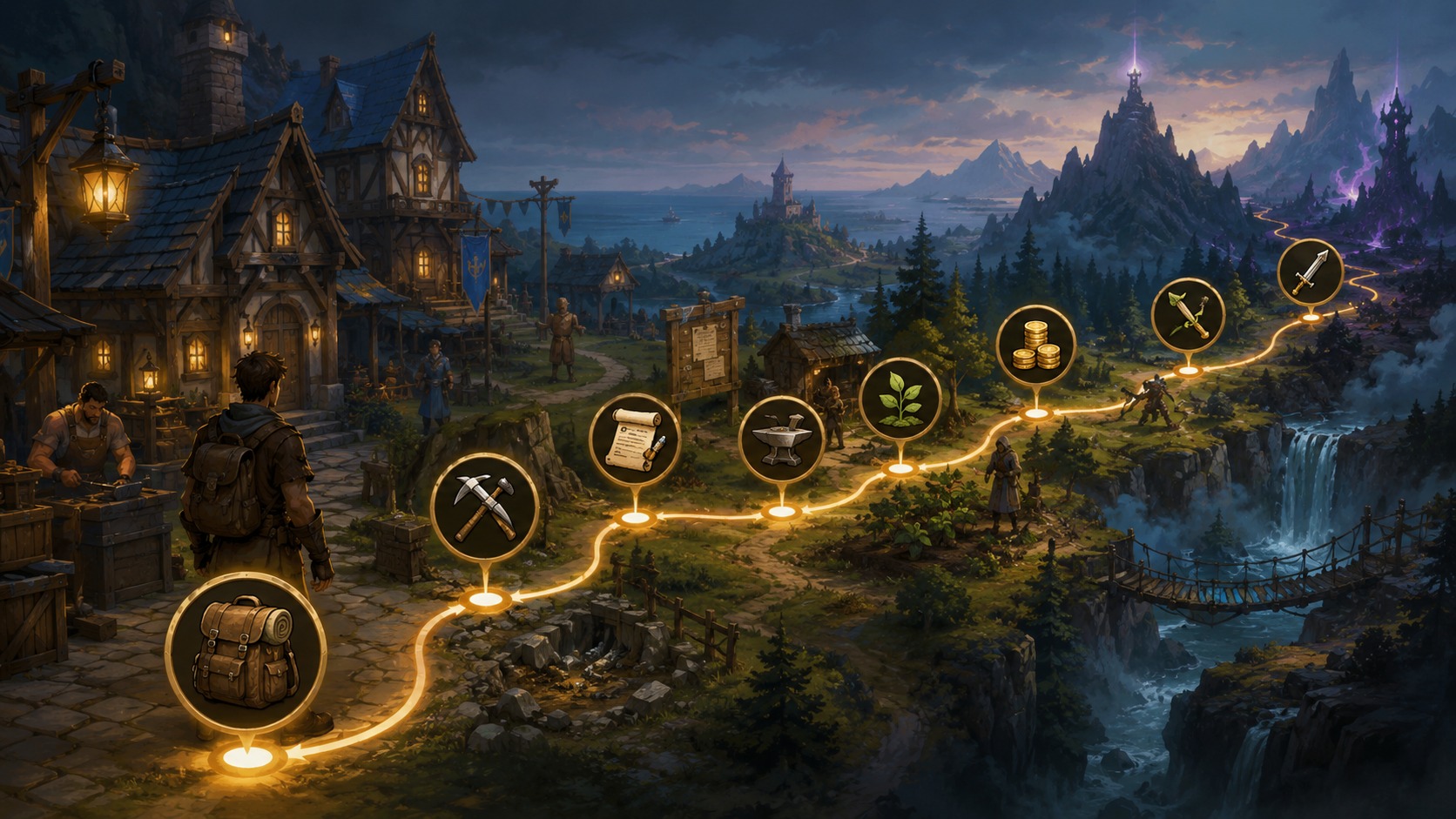
Your early roadmap should look like this:
| Step | Goal |
|---|---|
| 1 | Finish the tutorial and learn basic movement/combat |
| 2 | Explore Hopeport and unlock starter professions |
| 3 | Buy or find the tools needed for early skilling |
| 4 | Learn where vendors, storage, and service NPCs are |
| 5 | Complete early quests that unlock useful features |
| 6 | Train professions in short loops |
| 7 | Move toward the next area when you are not constantly stuck |
Hopeport includes early professions such as Guard, Chef, Fisher, Forager, and Alchemist, while later areas add more professions as you progress through episodes.
What to Do First
After the tutorial, do not immediately grind the first enemy or resource you see for hours. Spend your first session learning the layout.
Start by doing these things:
- Follow the opening questline until the game sends you around Hopeport.
- Visit the main shops and note where tools are sold.
- Unlock the basic professions available in the starting area.
- Try each activity once so you understand what items it uses.
- Keep useful drops until you know whether they are needed for crafting, potions, cooking, or quests.
A good Brighter Shores beginner guide can help with the very first steps, but your main goal is not speed yet. Your goal is to stop feeling lost.
Once you know where the main streets, shops, training areas, and resource spots are, the game becomes much easier to route.
Early Skills and Professions
Early progression should be balanced. Guard helps you handle combat. Fisher and Forager provide resources. Chef turns ingredients into food. Alchemist helps with potions and support items.
A simple early rotation is:
- Train Guard until combat feels comfortable.
- Gather or fish until your inventory fills.
- Sell low-value extras or use materials in another profession.
- Cook or make potions when you have the right ingredients.
- Return to quests when you need direction.
This prevents burnout and teaches how the game’s economy connects together.
Do not worry about perfect efficiency at the start. Some professions may feel slow until you unlock better actions, tools, or routes. If one activity feels blocked, switch to another profession for a while.
For a more focused path, use an early game route after you understand the basics.
Money and Selling Basics
Early money should be treated as a tool, not a score. You need coins for tools, supplies, and small upgrades, so avoid wasting money on items you do not understand yet.
Good early money habits:
- Sell items that are easy to replace.
- Keep materials that are used in your current profession loop.
- Do not buy every tool at once unless you know you need it.
- Check vendor prices before dumping your full inventory.
- Turn raw materials into more useful items when it makes sense.
The safest beginner money route is to gather, fish, fight, and sell spare items while slowly learning what each profession consumes. Once you know which activities feel easy for your level, you can follow a dedicated early money making guide.
Avoid comparing your silver to experienced players. Early progression is more about unlocks than wealth.
Tools, Storage, and Vendors
Tools are one of the most important early blockers. If an activity is not working, you may be missing the correct tool, standing in the wrong place, or trying an action above your current level.
When you enter a new part of Hopeport, check for:
- Tool vendors
- General vendors
- Profession shops
- Storage access
- Quest NPCs
- Nearby resource spots
Vendor locations matter because Brighter Shores has many profession-specific items and services. Player-made vendor lists also note that merchants are spread across Hopeport and later areas, so learning shop locations saves time.
Storage is just as important. A full inventory slows every profession. Make a habit of banking or storing items before starting a longer route. Keep your inventory clean enough that you can pick up drops without constantly running back.
Use a tool locations guide if you are stuck because you cannot start a profession action.
Quests and Map Progression
Quests are not just story content. They often teach systems, send you to important NPCs, and open up new parts of the game.
In the early game, prioritize quests that:
- Unlock useful features
- Introduce new professions
- Send you through unexplored parts of Hopeport
- Explain combat, gathering, crafting, or potion systems
- Help you access the next main area
Do not skip dialogue too quickly if you are new. Brighter Shores often uses quests to point you toward the next useful system.
Map progression is also tied to confidence. Before pushing ahead, ask yourself:
- Can I find the main vendors without checking every room?
- Do I know where to train my current professions?
- Can I make money when I need it?
- Do I understand what to sell and what to keep?
- Have I completed the obvious early quests?
Once the answer is mostly yes, you are ready to move deeper into the game.
When to Move Into Mid Game
You are entering mid game when you stop asking “what do I do now?” and start choosing your own goals.
Signs you are ready:
- You have several unlocked professions.
- You understand basic storage and selling.
- You can follow a skilling loop without running out of space every few minutes.
- You have completed the main early quests available to you.
- You are comfortable fighting enemies around your level.
- You know which profession you want to level next.
At this point, move from general learning into focused leveling. Pick one or two goals, such as raising Guard for combat, improving gathering skills, building potion access, or preparing for later zones.
For the next step, use a Brighter Shores leveling guide to turn your early foundation into faster progress.
FAQ
What should beginners do first in Brighter Shores?
Finish the opening tutorial, follow the first quests, unlock the early Hopeport professions, and learn where the main vendors and storage options are. Do not start with long grinding before you understand the basic systems.
Which profession should I level first?
Guard is useful because combat appears early, but you should also try Fisher, Forager, Chef, and Alchemist. A balanced start is better than rushing one profession without knowing what other systems need.
Should I sell everything I collect?
No. Sell easy-to-replace extras, but keep items that are used for your active profession, quests, cooking, or potions. When unsure, store items first and sell later.
When should I leave the starting area?
Move on when you understand Hopeport’s basic layout, have unlocked the main early professions, completed key starter quests, and can make money without feeling stuck.
Is early progression fast in Brighter Shores?
It can feel slow at first because the game teaches many systems at once. Progress becomes smoother once you learn your tools, vendors, storage, and profession routes.